The Chalkboard
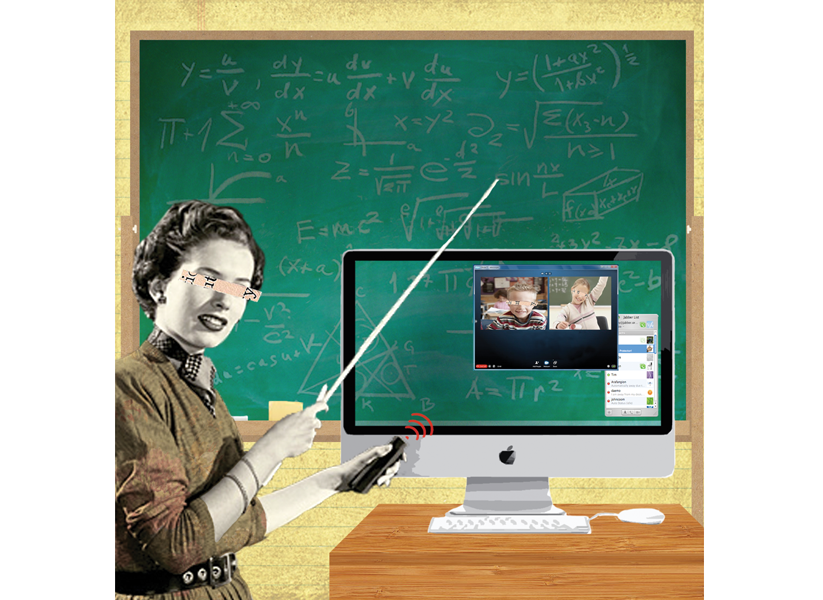
“Chalk is another medium of mathematical materialization. Since the early nineteenth century, chalk has been indispensable in mathematics pedagogy, discovery, and mythology. It springs to life in the mathematician’s hand like an animate being.(When he is not playing the violin, riding his bike, or sticking out his tongue, Einstein iconically stands in front of a blackboard covered with abstruse symbols.) The aim of mathe-matics is to render intuitions intelligible via semiotic conventions, and chalkboards are a way to materialize objects of analysis.”
In this passage from John Durham Peters’ The Marvelous Clouds, Peters discusses chalk as more than simply a tool for writing mathematics. He argues that chalkboards have played an important role in the development, teaching, and cultural understanding of mathematics because they allow abstract ideas to become physical and visible. When Peters says that chalk “springs to life in the mathematician’s hand like an animate being,” I think he is emphasizing the relationship between the person thinking about an idea and the medium they use to express it. This is the part that sticks out to me.
I agree with Peters’ argument because I think the same idea applies to communication in many other areas besides mathematics. People often think of communication as simply transferring information from one person to another, but the medium through which information is presented can change how we understand it. A chalkboard is one example of a medium that shapes the information being communicated. A professor can erase something, draw an arrow, circle an important point, or add something new. The board becomes almost like a record of the thought process.
This passage also connects to ideas I have encountered in media and communications. In my understanding of media, the medium is not always neutral. The format we use to communicate something can influence how the audience receives and understands it. For example, explaining an idea verbally is different from presenting the same idea through a graphic, video, or social media post. A graphic can make relationships between ideas easier to see, while a video can combine visuals, sound, and movement to create a different understanding of the same information. In that sense, Peters’ chalkboard is similar to modern forms of visual media.
I also think the reference to Albert Einstein is important because it shows how the chalkboard has become part of the cultural image of what a mathematician or scientist looks like. The famous image of Einstein standing in front of complicated equations reinforces the idea that difficult intellectual work happens through physical media. Even though computers and digital tools have largely replaced chalkboards in many settings, the basic idea remains. Scientists, mathematicians, and students still use screens, diagrams, graphs, presentations, and digital whiteboards to turn abstract thoughts into something that is easier to digest for the everyday consumer of the media.